Skip to content
Flying Termite — Pest Control

General Pest Control · St. Paul, MO

General Pest Control in St. Paul, MO - Mosquito Treatment & Termite Inspection

In St. Paul, MO, newer suburban homes and rural wood-frame houses call for different inspection routes, especially when pests find gaps around doors, siding, or utility lines. We tailor each visit to the property.

  • Serving since 2016
  • Missouri-licensed pesticide applicator
  • Insured pest-control operations
  • National Pest Management Association member

Request a quote

Tell us what you need and we will call you back.

Request a quote

Hot, humid summers can push more pest activity indoors, so we check likely entry points and the conditions that attract pests rather than treating every room the same way. Heavy rain can also wash down exterior applications; after a soaking storm, our team checks whether weather affects the planned treatment. Timing matters. Temperature swings can change when a pesticide can be applied as directed, so we review conditions at the property before choosing a treatment. A clear plan comes first. We serve St. Paul properties along the MO 79 and MO 94 routes.

Who Handles Pest Control in St. Paul, MO?

St. Paul’s small-town residential community includes newer suburban homes and rural wood-frame houses, so a useful inspection must account for different entry points and building details.

Cold winter freezes can bring rodents indoors; we check likely openings and explain practical next steps before treatment. Spring storm and hail risk can also complicate exterior access, so scheduling may depend on safe site conditions.

Paul for more than 10 years. We coordinate visits for properties in St. Paul and keep customers informed about access and follow-up. Expect a careful inspection and plain-language recommendations.

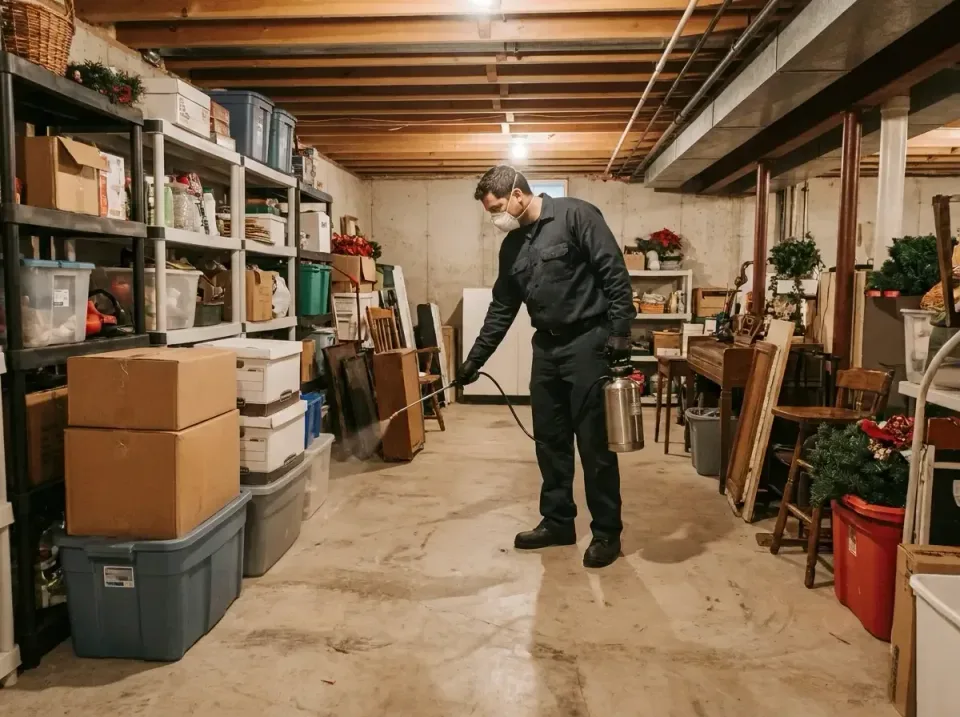
Pest Control Technician — Residential Basement

Pest Problems in St.

Paul Homes Get a Property-Specific Plan

Mouse droppings in kitchen cabinets are a reason to check food storage and openings around pipes. Freeze-thaw cycles can open foundation cracks in St. Paul, giving rodents a route indoors; our crew checks accessible gaps and interior activity before recommending exclusion work. You can safely inspect cabinet corners for droppings without disturbing them.

Hot, humid summers can make indoor pest activity more noticeable in St. Paul homes. Keep food sealed and note where and when you see activity.

Our service area includes St. Paul, MO. We also check the property’s setting: St. Paul is inland, so customers do not need to plan around coastal weather patterns, while summer humidity can contribute to moisture conditions that pests use. Call when activity persists or you cannot identify its source.

How to Check Pipe Gaps Before Pests Get Inside

A gap where a pipe enters a St. Paul basement can be easy to miss. Winter freezes may expose or widen openings around pipes, creating access that an indoor spray alone will not correct. Check visible pipe penetrations from a safe, dry spot; do not pull apart insulation or disturb wiring.

Our team follows Integrated Pest Management principles: we inspect for activity, identify access points, and choose control steps based on what we find. That can mean recommending exclusion work alongside a targeted treatment rather than relying on repeated broad applications. In St. Paul, we also review the property’s entry points before setting a plan.

Pesticides registered with the EPA carry an EPA registration number, which helps customers identify the product being used. If you find recurring activity near a pipe or foundation, we can inspect and explain the next step.

Missouri Pesticide Rules Guide St. Paul Treatments

St. Paul customers should expect pesticide work to follow state and federal requirements; the rules do not turn a routine pest visit into a locally issued treatment permit. Our team confirms the target pest before selecting an application, since using a product for the wrong pest can leave the source of activity unresolved.

We document pest activity and treated locations so customers can understand what was addressed and what to monitor. That record is useful at a St. Paul property when activity returns in a different room or area.

Qualifying pesticide waste may fall under RCRA hazardous-waste rules, so disposal depends on the material and circumstances. We explain the treatment and any relevant site instructions before work begins.

Why us

Local General Pest Control in St. Paul, MO

Get a clear inspection and practical treatment plan for your St. Paul home.

Clear Scope First

A technician inspects the affected areas, confirms the target pest, and explains the recommended treatment before work begins. You can discuss the scope and understand what the service is intended to address.

Missouri Experience

The team brings ten years in pest control and experience with Missouri homes, from older brick construction to basements. That local perspective helps technicians consider how home features can affect pest activity.

Direct Communication

Missouri Pest Solutions coordinates appointments from its St. Louis base and schedules service across the state. The team accounts for regional travel, explains the plan, and arranges follow-up when monitoring shows continued activity.

Our process

How a visit works

The visit moves from identifying the pest to explaining treatment and any needed follow-up.

01

Discuss the Concern

On the first call, describe the pest activity and affected areas. The team coordinates an appointment from its St. Louis base, accounting for travel and regional scheduling.

02

Inspect the Areas

A technician checks the reported locations and confirms the target pest before choosing treatment. You receive an explanation of the findings and the recommended scope of work.

03

Prepare for Service

Secure pets and food-contact items, and provide access to baseboards, sinks, and utility areas. The technician explains any product re-entry instructions before treatment begins.

Typical jobs

Typical jobs in St. Paul, MO

Typical job

Property owners report bed bugs in an

A technician inspects the affected areas and discusses the request for an estimate on heat treatment. The inspection helps establish what the job involves before a treatment plan is recommended. The owner gets a clearer picture of the affected areas and the proposed work. For multi-unit properties, sharing which rooms show activity can help focus the inspection.

Typical job

Residents notice a bald-faced hornet nest in

The crew reviews the reported nest location and assesses the situation before recommending a response. The caller’s description helps the technician understand where the nest is and how it is positioned. The customer receives guidance based on the inspection and the recommended treatment. Keep people away from the nest area and avoid disturbing it while arranging professional help.

Typical job

Homeowners report mouse activity and want help

A technician inspects the affected areas, confirms the target pest, and explains the recommended treatment. The service record documents activity and treated locations to support any follow-up if monitoring shows continued signs. The homeowner understands which areas were addressed and what to watch for afterward. Keeping food secured and noting new activity can help inform any follow-up discussion.
Warning signs

Early Signs to Notice

Discarded Insect Skins

Discarded insect skins can be an early sign of activity indoors. Look near stored belongings, along room edges, and in undisturbed areas. Note where you find them and whether new skins appear, so an inspection can focus on the right locations.

Small Holes in Stored Paper

Small holes in stored paper may point to silverfish activity. Check boxes, books, and other paper goods kept in dark storage areas. Early attention can help identify where activity is occurring before more stored items show damage.

Unusual Insect Odor

An unusual, persistent odor in a closed storage area can be a clue to investigate. Check nearby belongings for visible insect activity or damage, and note the location. An inspection can help determine whether pests are contributing to the odor.

Through the year

Pest Control Throughout the Year

Spring

Spring storms and hail can disturb exterior areas and expose gaps around a home. Check siding, foundation edges, and utility openings after severe weather. A pest inspection can identify possible entry points and help you address activity before it spreads indoors.

Summer

Warm weather brings more time outdoors and more chances to notice pest activity near the home. Check around entry points, storage areas, and utility lines. Booking an inspection can help identify the target pest and clarify what treatment may be needed.

Fall

As outdoor conditions change, pests may seek shelter in homes and outbuildings. Inspect basement edges, stored belongings, and openings around pipes. A fall service visit can identify activity and help you understand which areas need attention before colder weather.

Winter

Cold winter freezes can push pests toward warmer indoor spaces, where activity may become easier to notice. Check basements, kitchens, and utility areas for signs. A winter inspection can help confirm the pest and identify an appropriate treatment plan.

Before you hire

Questions to Ask Before Hiring

Q1

Is the pesticide applicator properly licensed for this work?

Missouri requires licensing for pesticide work. Ask who will perform the application and whether their credentials meet state requirements.

Q2

How are appointments scheduled for St. Paul?

The company coordinates appointments from its St. Louis base and schedules across Missouri. Ask how travel and regional demand affect availability, and what appointment window to expect, so you can plan access to the areas being inspected.

Q3

Are follow-up visits or ongoing terms part of the plan?

Ask when follow-up may be recommended, what monitoring means, and whether any ongoing service terms apply. Understanding those details before agreeing helps you know what happens if activity continues after the initial visit.

Ready to get started?

Call to talk through your job in St. Paul.

10+

Years serving St. Paul

181

Areas served

FAQ

General Pest Control FAQs in St. Paul, MO

Straight answers for customers in St. Paul on pricing, delivery, and scheduling.

What should I do if I find mouse droppings in a St. Paul kitchen cabinet?

Avoid sweeping or disturbing the droppings. Note which cabinet they are in the area, keep food sealed, and check nearby visible pipe openings without taking apart fixtures. Our team can inspect for activity and likely entry points before recommending a plan.

Does rain affect pest control visits in St. Paul?

It can affect exterior treatment timing or access. Tell us about recent heavy rain or standing water when scheduling; our team will assess conditions at the property and explain whether the planned work should proceed.

ZIP code

ZIP Codes We Serve in St. Paul, MO

General Pest Control covers every ZIP code in St. Paul, MO.

63366
Local Leadership

Meet Your Local Experts

Daniel Harper Lead Expert

Missouri Pest Solutions

"Steady Pest Control Across Missouri"

I built my pest-control trade in the St. Louis area, where older brick homes, basements, and changing seasons bring different pest problems through the year. I started this company to give Missouri homeowners clear inspections and practical treatment plans, while keeping current with the state licensing requirements for pesticide work.

10+ years experience Missouri-licensed pesticide applicator Insured pest-control operations National Pest Management Association member
Get a Quote

Get a General Pest Control Quote in St. Paul, MO

Share job details below or call our team directly. Phone: (877) 729-2528

Call Us

(877) 729-2528

Our Location

St. Paul, MO

Working Hours

Mon–Sun 8 AM–9 PM